Design & research for the messy, human side of technology ◡̈
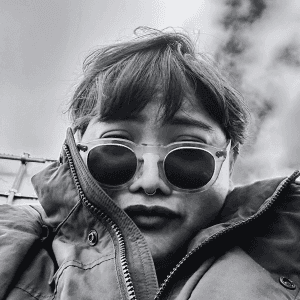
Hi, I am Sai ◡̈ Pitshaya Chonato
My background
I am a designer and researcher from Bangkok, now living in Rotterdam.
I recently completed my MSc in Design for Interaction at TU Delft (cum laude), specializing in Medisign (healthcare design). My thesis explored how families share health information to support chronic care, resulting in a framework for relational use in health technologies.
Before that, I spent four years in Bangkok working as a UI/UX and data designer with Punch Up & WeVis, collaborating with journalists, NGOs, and universities. I created interactive visualizations and civic platforms about healthcare, climate change, and government transparency, reaching wide public audiences. I used to work with data, designing systems that made it visible and usable. Now I'm curious about the invisible work behind the data systems themselves.
How I work
I combine participatory design methods with practical product skills. I work with people and the contexts of their lives at the center, whether that's facilitating co-creation sessions or building prototypes. I'm drawn to the moments where technology is supposed to help but the human reality is more complicated than the system assumed.
What I'm looking for
Design research or product roles working on systems where the official version of "how it works" and people's lived experience don't align, especially where data gets layered onto an existing workflow. That gap is something to understand and design for, not something to blame on the people using it.
What I can do
Participatory and qualitative research: contextmapping, patient journeys, co-creation sessions
Usability studies translated into actual design decisions, not just reports
Complex data and insights made legible through visual and digital experiences
Workshops that bring researchers, clinicians, and communities into the design process
What I work from
Technology is entangled in our lives, and messiness is just how people actually live with data and technology. I work from data humanism: numbers live alongside lived experience and sometimes more data doesn't mean better care.
And from the ethics of care lens: I care about how people live with technology over time, how it gets maintained, coordinated, and kept alive by people. So I ask these questions of a data system: who does the invisible work, how do people live with it over time, what do they get back for what they give it, and how could we design for these things?
That shows up across different contexts I care about: chronic care and collaboration in care contexts, aging society and care networks, mental health and social support, civic technology and collective action, AI and human collaboration in care settings.